
 Knowledge CenterArticlesWhat Flexible Funding Makes Possible What Flexible Funding M…
Since launching Yield Giving in 2019, philanthropist MacKenzie Scott has distributed more than $26.3 billion in unrestricted grants, with a growing share directed to organizations working across Africa, Asia, Latin America, and the Middle East. The real-time impact of Scott’s giving is hard to overstate. Independent research has consistently shown that for many organizations, these abundant and flexible grants have provided stability through upheaval and served as a catalyst for new growth.
As global geopolitical instability and philanthropic volatility continue to disrupt the conditions for social impact work in the Global South, this report elevates learnings from organizations that have received MacKenzie Scott funding. Drawing on seven organizational case studies published alongside this report, the analysis shows how flexible, trust-based capital shaped real decisions and outcomes amid sustained philanthropic turmoil over the past six years.
Together, these stories reveal the philanthropic practices that mattered most and offer clear, practical guidance for donors seeking to support organizations working in the Global South, ultimately offering a roadmap for how the social change field can move forward with hope and resilience in 2026 and beyond.
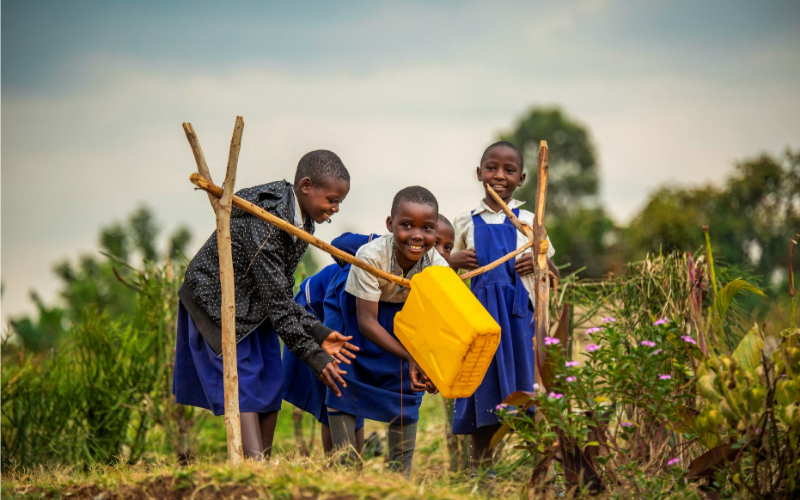
Members of the Sanitation Club at St. Peter and Paul Primary School, Bunyagabu District, Western Uganda, demonstrate how a tippy tap works. © Amref Health Africa / Ambrose Watanda
From Panorama Global’s vantage point—as an intermediary funder, social impact accelerator, fiscal sponsor, and convener— we sit at a rare intersection in the philanthropic ecosystem. We are positioned to observe how shifts in funding practices ripple across regions and issue areas. We can also see how those shifts land, in real time, for organizations delivering critical work on the ground.
In 2022, Panorama launched the Collaborative Learning for Impact Philanthropy initiative to better understand the rise of large, unrestricted philanthropic gifts; convene nonprofit leaders to surface practical lessons on leveraging this type of funding; and produce resources that can inform funders navigating increasing global uncertainty. (The initiative is part of a larger body of work, including our latest analysis of Scott’s December 2025 giving.) Over the course of 2025, this initiative brought together more than 35 nonprofit leaders through three learning community cohorts. Each participant leads an organization working in the Global South that has received a large, unrestricted grant from philanthropist MacKenzie Scott within the past five years.
These learning communities created space for leaders to connect across geographies and share concrete strategies for translating a transformative gift into long-term organizational resilience and impact. Across cohorts, a shared realization quickly emerged: the global philanthropic environment was shifting rapidly, and not in stabilizing ways. Against that backdrop, Scott’s gifts, and the trust-based practices behind them, enabled organizations to stay afloat in choppy waters and, in some cases, make bold investments at a moment when many organizational peers were being forced to scale back or shutter essential programs.
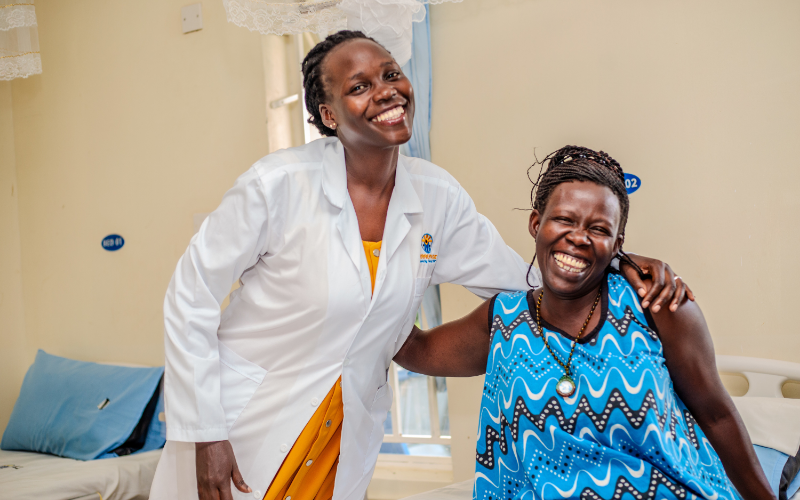
Fistula surgeons like Dr. Mary Aono (left) provide the life-transforming care that restores decades of health for women like Agnes, ensuring she can once again care for her family and contribute to her community. © Muthoni Njuki
The Center for Effective Philanthropy’s multi-year research on Scott’s giving found that recipients most often used funds to strengthen balance sheets, build or replenish reserves, invest in staff and systems, and expand or deepen core programs, ultimately enabling more strategic planning and greater resilience.
For organizations participating in the 2025 learning communities with Panorama, Scott’s grants provided critical breathing room during a period of acute funding disruption. Leaders described using these funds to offset sudden losses from government and bilateral funders, retain core staff when other funding streams evaporated, and adapt programmatic strategies in response to evolving real-time challenges.
“When we received our MacKenzie Scott grant, we used a portion to strengthen essential systems and held the remainder in reserve to support strategic programmatic priorities. This approach proved invaluable when USAID [United States Agency for International Development] dissolved.
At the time, USAID-funded programs represented 30 percent of our revenue in 2025 across critical work in Northern Kenya, Madagascar, Rwanda, and Ethiopia. In total, we lost $10M USD in secured funding for 2025 and the years to come that would have lifted nearly 100,000 families from extreme poverty.
Because of our MacKenzie Scott gift and other trust-based unrestricted, multi-year commitments, we were able to maintain strategic momentum rather than retreat.”
Sazini Mojapelo, Chief Executive Officer, Village Enterprise
Three features of Scott’s funding approach emerged as the most impactful in helping organizations navigate broader philanthropic volatility. These practices consistently unlocked organizational stability, confidence, and growth, even against a challenging funding backdrop.
Leaders emphasized that grants two or three times the size of an organization’s annual budget created the conditions for transformational change. Abundance, in this context, is not about extravagance. It is about providing enough support for organizations to pursue long-term strategy rather than defaulting to short-term survival.
“When funders reduce administrative burden and focus on meaningful metrics, resources flow where they matter most. Trust-based philanthropy isn’t a luxury, it’s a force multiplier.”
Pam Lowney, Chief Executive Officer, Fistula Foundation
Unrestricted, multi-year funding allowed leaders to respond with clarity rather than scramble to realign plans with shifting funder requirements. Organizations used flexible funds to retain staff, fill funding gaps, expand programs during moments of heightened need, and build reserves for long-term resilience.
“Unrestricted donations eliminate bureaucratic costs and allow organizations to decide how best to allocate the funds... It also helps minimize the colonialist nature of traditional donation models.”
Cynthia Betti, Chief Executive Officer, Plan International Brazil
Scott’s predominantly invitation-based approach, (in which where her team conducts independent research and due diligence outreach rather than requesting lengthy formal proposals), combined with the absence of reporting requirements and an emphasis on elevating grantee organizations over her own donor branding, signaled genuine trust. Leaders described how this approach reduced administrative burden, strengthened internal morale, and increased credibility with peers and other funders.
“Trust-based giving is catalytic and cascading... One major institutional donor explicitly cited the Scott grant as the reason for a subsequent multimillion-dollar investment.”
Pam Lowney, Chief Executive Officer, Fistula Foundation
Over the past six years, the global funding landscape has swung from extraordinary expansion to sharp contraction. In response to the COVID-19 pandemic, philanthropic dollars flowed more abundantly and flexibly than ever. Yet as the acute phase of the crisis receded, that exceptional mobilization did not translate into sustained long-term commitments to the complex challenges that remained.
As global giving pulled back, organizations working in the Global South also encountered increasing friction in receiving and deploying cross-border funding. The 2025 Global Philanthropy Environment Index, conducted at Indiana University’s Lilly Family School of Philanthropy, found a continued decline in conditions for cross-border philanthropic flows since 2021, with Latin America and South and Southeast Asia among the most constrained regions. This finding is particularly concerning because political, economic, and legal conditions at the country level determine what philanthropy and nonprofits can do.
In Brazil, the Index points to a philanthropic sector dominated by corporate giving, limited incentives for individual donations, shrinking civic space, and heightened pressure on rights-based organizations. In India, the constraints are even sharper. The Foreign Contribution Regulation Act (FCRA) places strict limits on how foreign funds can be received and used, including caps on administrative expenses and prohibitions on regranting. In both contexts, these restrictions add an additional layer of burden for nonprofits already operating with limited financial flexibility.
“Brazil lacks a robust legal framework to incentivize donations, and NGOs [non-governmental organizations] working on rights-based issues often face political pressure and even criminalization.”
Cynthia Betti, Chief Executive Officer, Plan International Brazil
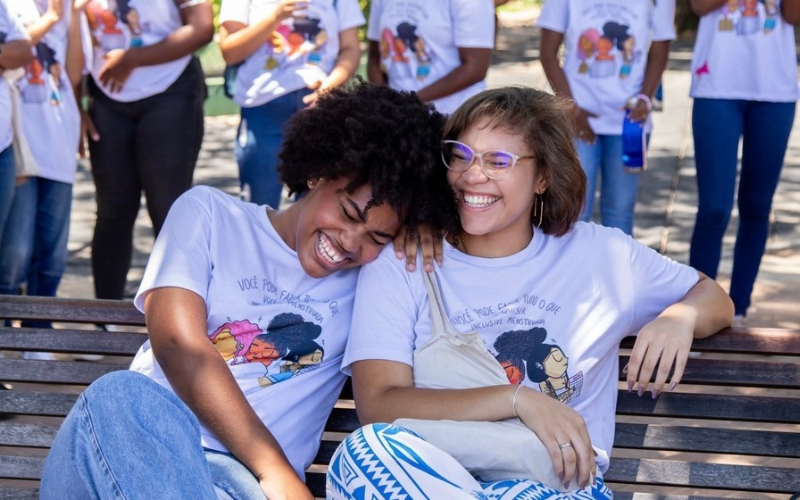
Girls from the Girls’ Leadership School project in Teresina (PI). © Plan International Brazil
These structural constraints were compounded in 2025 by abrupt reductions in bilateral aid. Large-scale cuts to United States Agency for International Development (USAID) funding, alongside reductions and reallocations of European aid budgets, sent shockwaves through the global development ecosystem. For organizations reliant on co-financing models, particularly in public health and education, the loss of government funding undermined not only individual programs but the viability of entire interventions.
Taken together, these forces created an unforgiving funding environment: post-pandemic philanthropic pullback, tightening country-level restrictions on cross-border funding, and sudden bilateral aid cuts. At the center of this collision are nonprofits delivering lifesaving programs that were forced to stretch reserves, revise plans, and make impossible tradeoffs simply to sustain their work. In this context, the size and flexibility of a grant can determine whether an organization holds the line or retreats at the very moment communities need them most.
“This year’s abrupt shutdown of USAID support created another shockwave for NGOs working on health and education...When our USAID-supported project came to an abrupt halt, we could immediately redirect Scott Grant resources to retain a few core staff, safeguard the groundwork already laid, and keep critical elements of the effort alive instead of losing momentum.”
Dr. Aparajita Gogoi, Executive Director, Centre for Catalyzing Change (C3)
“At a time when global uncertainty and shrinking civic space were pushing many rights-based organizations to the brink, the unrestricted gift MacKenzie Scott gave Women Enabled International [WEI] gave us something many movements rarely experience: breathing room. Rather than pouring our efforts into filling short-term funding gaps, we were able to focus on long-term strategy, including strengthening operations, investing in staff well-being, and planning ways to support the future of disability and gender justice work.
Scott’s unrestricted support allowed WEI to not only build on its own financial foundation, but to share lessons and resources with grassroots feminist disability organizations around the world, many of which continue to operate without the safety net that flexible funding provides.
At WEI, we deeply believe this grant is a model for the kind of philanthropy needed to sustain intersectional movements.”
Maryangel García-Ramos, Executive Director, Women Enabled International
The turbulence of the philanthropic environment over the past six years has revealed a profound truth: the most effective support for organizations working in the Global South centers trust, respects local leadership, and provides the flexibility to deploy resources where they matter most.
Scott’s approach demonstrates that trust-based philanthropy is a necessary practice for a world in which volatility is the norm.
By investing in a manner that prioritizes abundance and flexibility, she has offered a blueprint for how donors can step up to help sustain progress even when the global political, economic, and philanthropic environment is unstable.
Not every donor can give at the scale of MacKenzie Scott, but every donor can revisit how they give and adopt the same practices that make Scott’s model so impactful. Even modest shifts, like loosening restrictions, simplifying requirements, and extending grant periods, can significantly strengthen an organization’s ability to adapt and endure. While the future remains uncertain, funders can decide now whether organizations will face it with brittle, conditional support or with the flexible capital they need to hold the line when it matters most.
The following case studies show how individual organizations used Scott grants to make critical decisions and sustain impact amid uncertainty:
Download this report
Panorama Global is a social impact nonprofit that works with bold leaders to tackle the world's most urgent, complex problems. We help move capital, build coalitions, clear barriers for changemakers, and share knowledge to advance social change.
Be the first to receive Panorama’s latest research and publications. Subscribe to our newsletter here!
 Your Vision
 Our Platform
 Real impact
Panorama Global is a member of The Panorama Group.
Privacy Policy © 2026 Panorama Global. All rights reserved.
 Contact Us
 Search
 Join Our Mailing List