
 Knowledge CenterArticlesWhat Unlock Aid Taught Us About the Ene… What Unlock Aid Taught …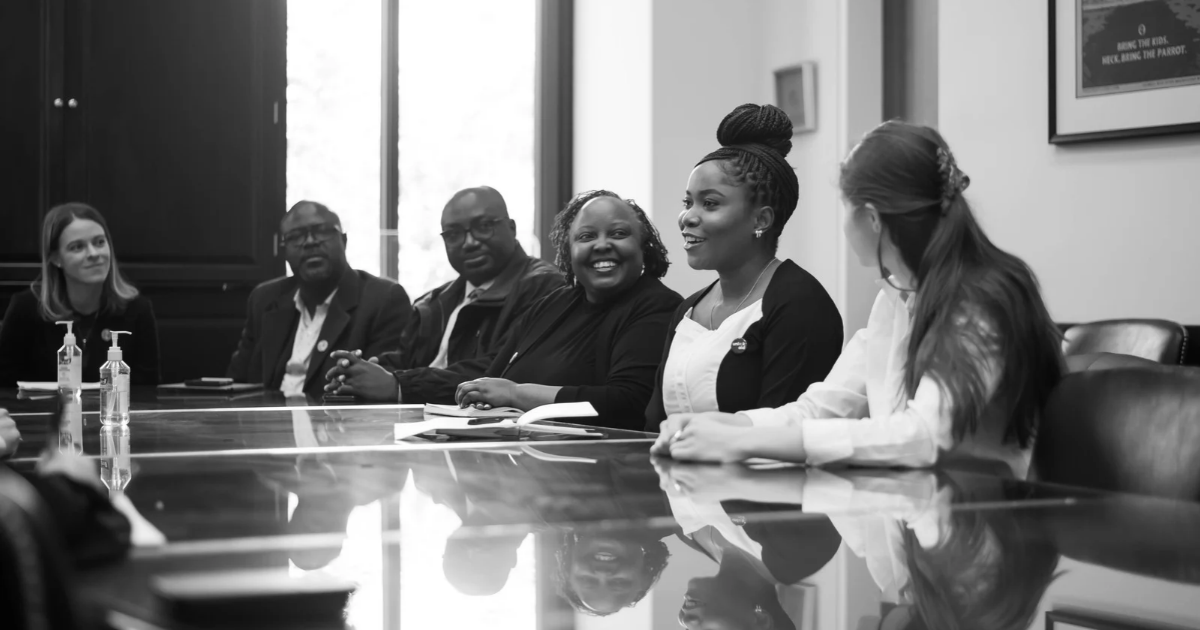
Unlock Aid coalition members meeting with policymakers on Capitol Hill
After five years of working to reshape global development around the people and ideas capable of transforming it, our partner Unlock Aid has closed its doors. Panorama Global served as Unlock Aid's fiscal sponsor from its earliest days, providing the operational backbone that allowed the Unlock Aid team to focus entirely on advocacy instead of overhead.
Panorama had a close view of how Unlock Aid operated—and in a sector where institutions too often measure success by their own survival, the decision to close strikes us as a deeply thoughtful, strategic choice. Unlock Aid’s leadership offers a lesson in knowing where to direct an organization's energy, and when that energy can accomplish more in others' hands. This was true to the organization’s DNA from the start.
From its first day to its last, Unlock Aid answered to its community. After interviewing dozens of social entrepreneurs to learn what kept them from working with the world's largest foreign aid agencies, Unlock Aid launched as a time-bound campaign with three goals: to rewrite the rules of development, to change what people believed development could achieve, and to give social innovators a home in Washington. That second goal meant showing what becomes possible when systems invest in a new generation of locally rooted, innovative partners.
Unlock Aid teamed up with lawmakers to draft bipartisan legislation and with officials inside government to change the rules that kept non-traditional actors out. It took the same approach with global health agencies, such as Gavi, and with philanthropy, shaping the strategy around insights from the entrepreneurs in the Unlock Aid community. The organization brought its community together several times a year to make sure its work was having a real impact, and to change course when it wasn't.
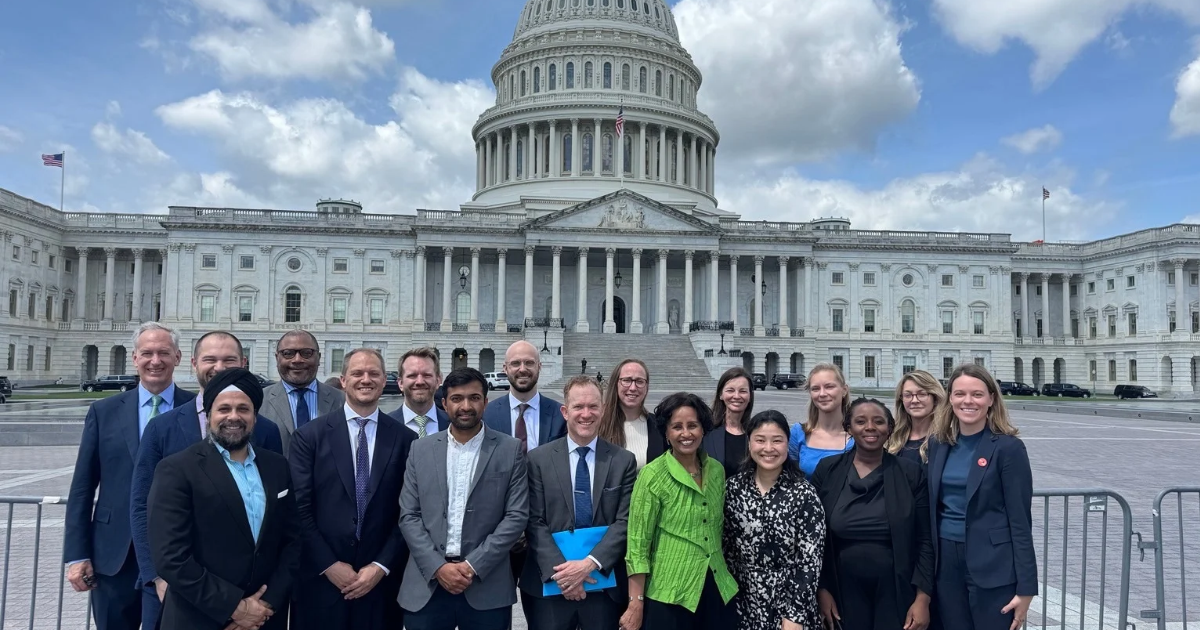
Unlock Aid’s 2025 Hill Day, held in partnership with the Africa Diaspora Network
When the U.S. foreign aid freeze hit in 2025, Unlock Aid went from speaking on behalf of social entrepreneurs to supporting them directly. Within days, it arranged free legal support for hundreds of organizations, hosted weekly briefings to help leaders navigate fast-moving changes, and drove thousands of calls to Congress to protect funding for life-saving programs. With Panorama Global, it stood up the Foreign Aid Bridge Fund, which raised more than $2 million in emergency funding for high-impact organizations within weeks, while larger funds were still taking shape. Panorama leveraged its existing systems and trusted relationships to move fast, facilitating the Fund's grantmaking and overseeing the rapid review and disbursement of that funding. Together, the Foreign Aid Bridge Fund demonstrated what is possible when philanthropy, social entrepreneurs, and ecosystem partners move with urgency, ensuring critical programs could continue serving communities when support was needed most.
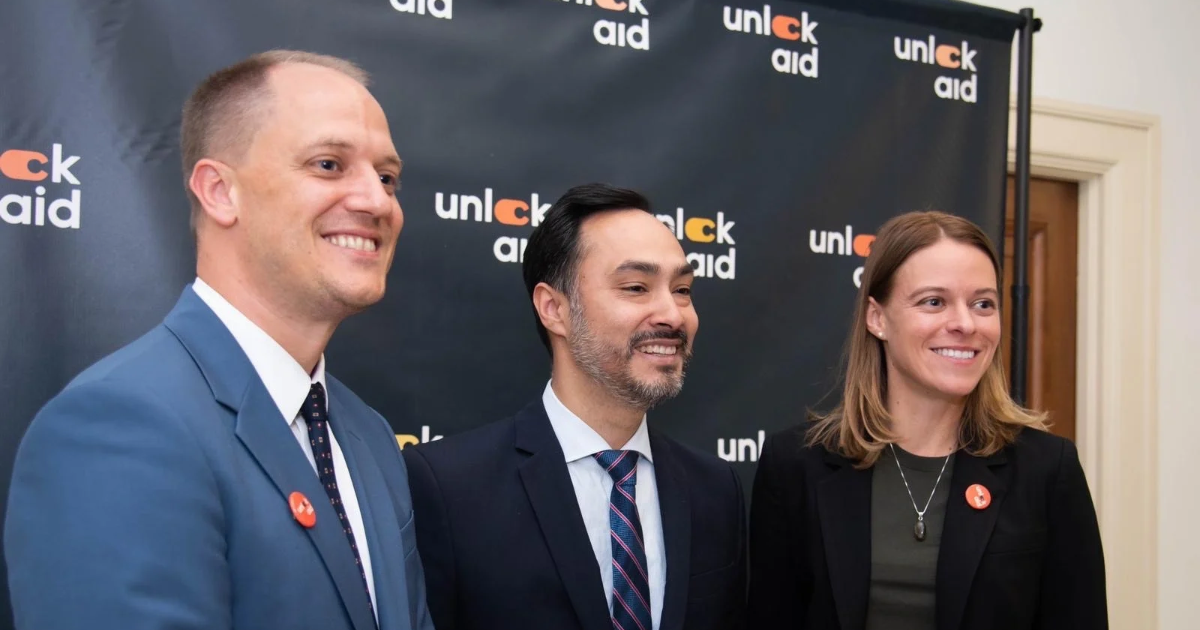
Unlock Aid Co-Executive Directors Walter Kerr and Amanda Arch with Congressman Joaquin Castro TX-20
The global development system built after World War II has saved millions of lives, but for too long it has also kept power and money too far from the people it serves. Unlock Aid never shied away from naming that tension directly. Those most affected by these inequities were often the least able to speak up, but Unlock Aid gave them a platform. In February 2023, Unlock Aid led an open letter campaign with good-government groups and Global South coalitions urging USAID to keep its promise to shift funding to local organizations. Hundreds of organizations representing tens of thousands of people signed on. Its October 2024 "Glassdoor for Primes" report, cited by The New York Times, exposed the worst practices of the aid sector's largest implementing partners.
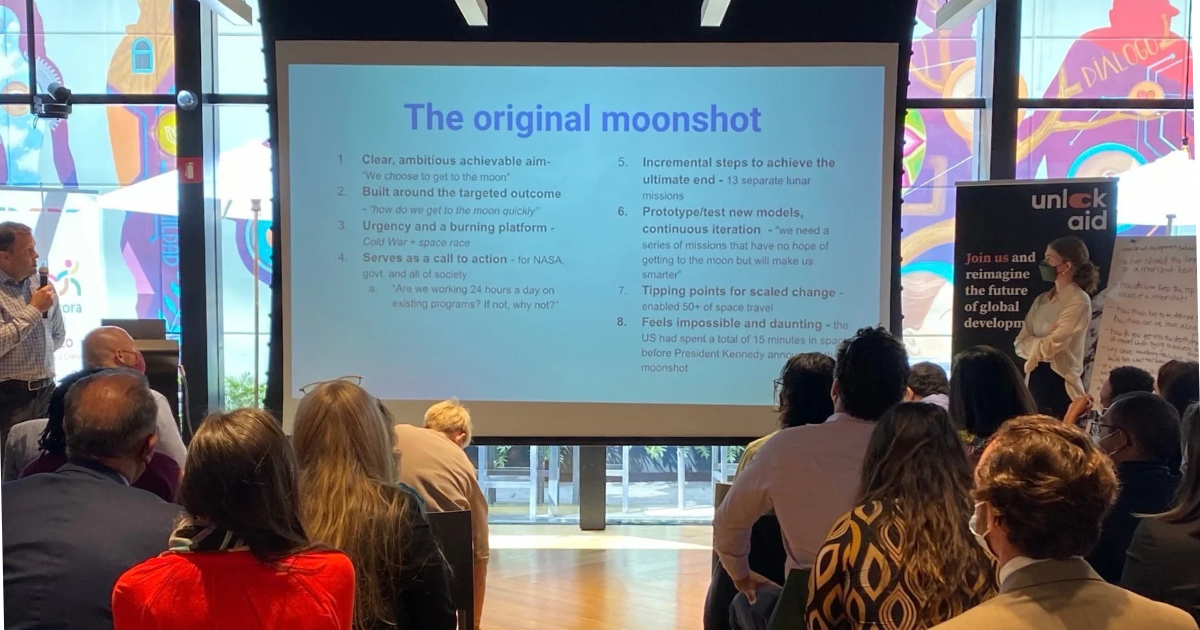
The Day One Project presenting at the 2022 SDGs Moonshot Accelerator event, co-hosted with Unlock Aid
The coalition brought many of the world's leading social entrepreneurs to Mexico City and asked them this expansive question; it was the first time many of these organizations had been asked to consider a blue-sky question like this before. Their answers became concrete proposals, from expanding universal access to menstrual products to mapping crop genomes to fight food insecurity. Some of these ideas later won funding from the federal government.
In 2023, long before the upheaval of 2025, Unlock Aid went on a global listening tour, asking entrepreneurs, faith leaders, and local leaders, "If we could start over, how would we build a better system?" and publishing a blueprint that many groups have since drawn on. Most recently, it published a "Solutions Index," a directory of 90 pacesetting organizations in global health, education, nutrition, and other sectors whose models have proven to be more effective, sustainable, and cost-effective than traditional approaches.
Most concretely, over five years, Unlock Aid also achieved results: helping shift more than $500 million to social entrepreneurs and local organizations long locked out of public funding. On the margins of the 2026 UN General Assembly (UNGA 81), dozens of entrepreneurs from the Unlock Aid community took center stage at some of the week's biggest events, such as Semafor’s Next 3 Billion, GOALS House, and Devex Impact House. They showed funders, policymakers, and media what new models of global development can look like.
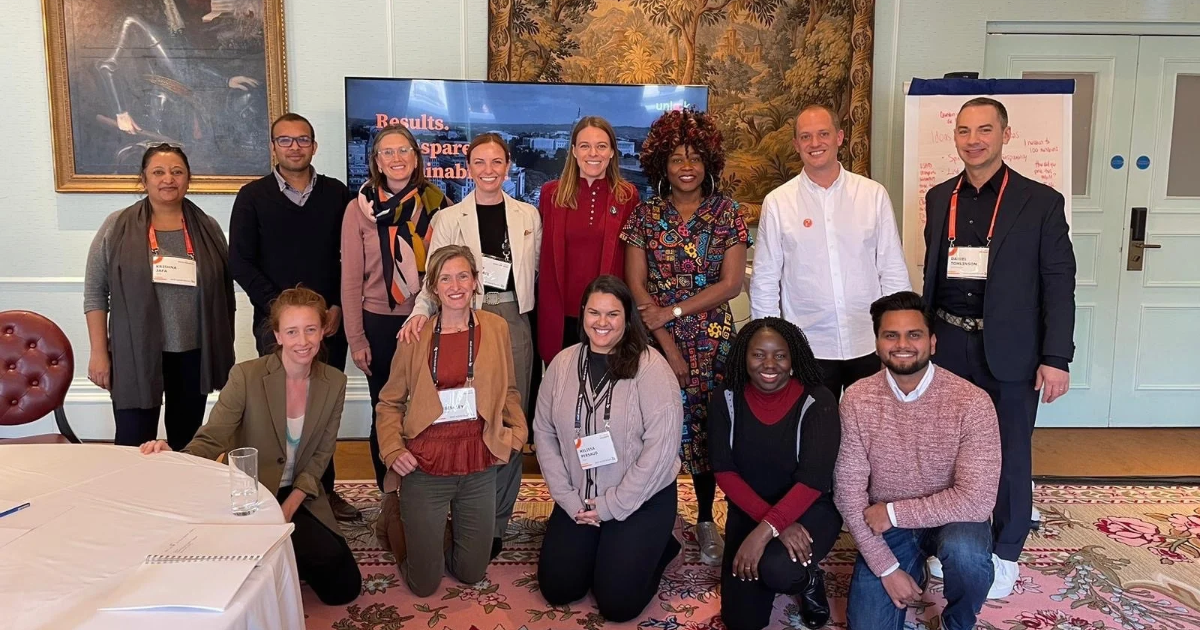
Unlock Aid coalition members gathering at the Skoll World Forum
Unlock Aid was never meant to last in perpetuity. It was built to bring focused energy to a system that needed change. The dismantling of much of the U.S. aid system created a profoundly different landscape, even as the reforms Unlock Aid championed remained unfinished. Yet at the same time, many of the ideas that Unlock Aid once argued for from the margins now sit in the mainstream as the broader development community considers what comes next: local leadership, investment over aid, and paying for results.
As Unlock Aid wrote earlier this year, staying on would have meant holding onto "a model built for a system that no longer exists." When the system changes, the organizations trying to change it must evolve, too.
The work is unfinished. But Unlock Aid understood that an organization's contribution can outlast the organization itself, and so it ended the way it began: with urgency, clarity about where its energy belonged, and its community in mind. We're proud to have built alongside them for five years, and we're grateful to carry that lesson forward into every partnership that follows.
See how our fiscal sponsorship team helps bold ideas launch and grow.
 Your Vision
 Our Platform
 Real impact
Panorama Global is a member of The Panorama Group.
Privacy Policy © 2026 Panorama Global. All rights reserved.
 Contact Us
 Search
 Join Our Mailing List