
 Knowledge CenterArticlesCase Study: Plan International Brazil Case Study: Plan Intern…
Girls from the Girls’ Leadership School project in Teresina (PI). © Plan International Brazil
Philanthropy in Brazil has grown steadily over the last decade, though slower than its economic potential. Before 2020, most non-governmental organizations (NGOs) relied on a few funding sources, especially corporate or public grants, while only large international NGOs could invest in individual giving programs. Today, grant-making remains limited, with most funding restricted to project implementation, making institutional development and overhead funding challenging.
However, the sector is gradually shifting toward structured approaches, including impact investing and systemic change strategies. Education, child protection, poverty alleviation, and community support remain priorities, but attention to social justice, racial and gender equity, climate resilience, and mental health is increasing.
Inspired by global movements, some Brazilian philanthropy actors have begun adopting practices that prioritize local knowledge and reduce bureaucratic barriers. The COVID-19 pandemic accelerated giving and highlighted emergency needs. However, this momentum slowed after mid-2020, revealing the challenge of sustaining a culture of giving beyond emergencies.
While international funding has declined, local philanthropy is growing, and funders are experimenting with collaborative models. Despite this innovation, shrinking civic space and legal and political constraints continue to challenge NGOs, especially those working on rights-based issues.
Receiving a large, trust-based grant from MacKenzie Scott was transformative for us. In a rapidly changing philanthropic and socio-political environment, with declining international funding, limited support for rights-based work, and growing competition for resources, this unrestricted funding strengthened our organizational resilience. It allowed us to invest in long-term capacity, expand programs for girls’ rights and gender equality, upgrade digital systems, and reinforce governance.
The grant also provided financial stability, enabling us to maintain critical operations without relying on emergency fundraising. It supported our innovation and systems of change through community-led initiatives and advocacy for structural reforms. The endorsement elevated our credibility, attracted new partners, and reinforced their commitment to shifting power to local communities and amplifying youth voices.
In short: the grant was more than financial support; it was a catalyst for resilience, innovation, and systemic impact in a challenging environment.
Guided by our 5-year Strategic Plan, we prioritized trust-based, low-bureaucracy use of the Scott grant. We built a financial reserve, strengthened internal capacity, boosted fundraising and branding, and supported programs, enabling continuity amid global funding cuts and investments in community projects, research, and infrastructure.
For funders seeking to strengthen trust-based philanthropic practices, prioritizing unrestricted funding is critical. This recognizes that organizations closest to communities are best positioned to allocate resources based on real community needs and pathways to impact.
It empowers organizations to shift decision-making toward communities, minimize colonialist donor dynamics, reduce reporting burdens, and maximize impact. Additionally, grant size should align with organizational scale and long-term ambition. Finally, due diligence should remain respectful and non-burdensome, as demonstrated throughout the MacKenzie Scott process.
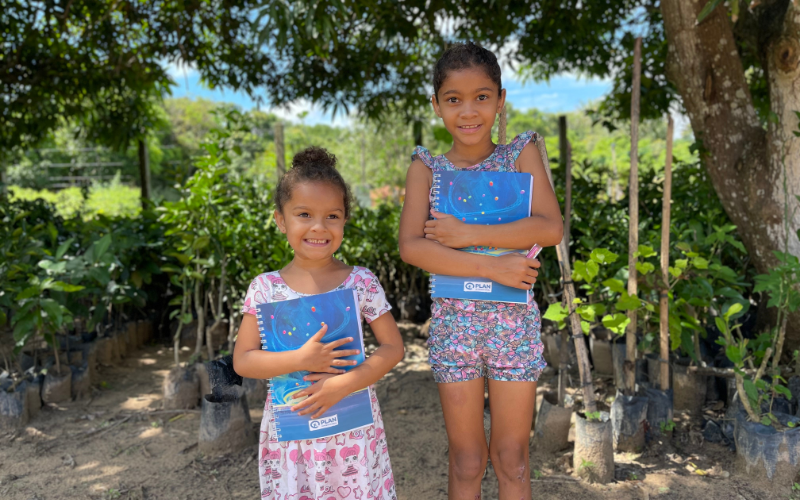
Sponsored girls receive notebooks in Teresina (PI). © Plan International Brazil
Download this case study
For more, see our report What Flexible Funding Makes Possible: How Global South Organizations Leveraged Funding from MacKenzie Scott to Sustain Impact in Turbulent Times.
 Your Vision
 Our Platform
 Real impact
Panorama Global is a member of The Panorama Group.
Privacy Policy © 2026 Panorama Global. All rights reserved.
 Contact Us
 Search
 Join Our Mailing List