
 Knowledge CenterArticlesCase Study: Fistula Foundation Case Study: Fistula Fou…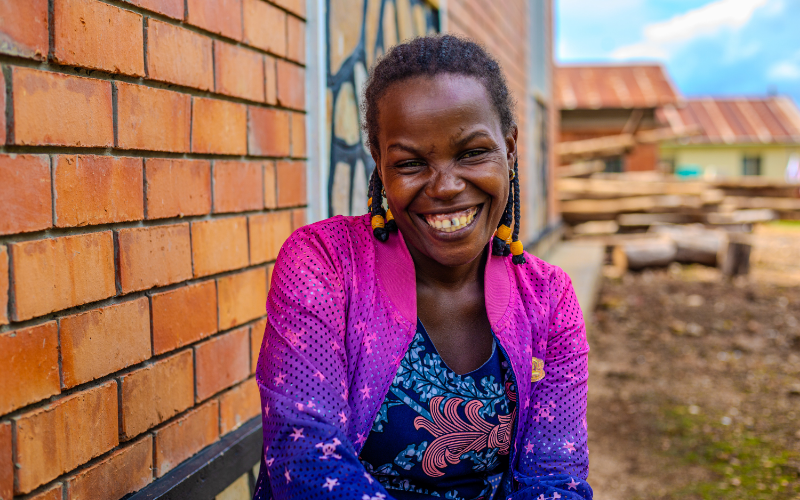
Surgery restores the health, hope, and future of women like Ruth who once suffered needlessly with fistula. © Muthoni Njuki
Obstetric fistula is a devastating childbirth injury caused by prolonged, obstructed labor without access to an emergency C-section. It leaves one million women across sub-Saharan Africa and South Asia isolated and outcast. Surgery is the only cure.
Before 2020, progress in delivering fistula treatment was slow but steady. International and regional strategies spurred national action plans, which helped improve awareness and access to care. Yet a lack of trained surgeons, inadequate health systems, socioeconomic barriers to care, and variable clinical outcomes remained persistent obstacles. As U.S. and international funding began to recede by the mid-2010s, Fistula Foundation, powered entirely by private philanthropy, emerged as the leading global provider of fistula surgery.
Today, demand for treatment still far exceeds available care. USAID funding cuts in 2025 threaten to widen this gap, with global health experts estimating 34,000 additional maternal deaths each year. For every woman who dies in childbirth, the World Health Organization estimates that 20 more will suffer severe injuries such as fistula.
We now operate in a philanthropic landscape shaped by fewer, larger, and more selective donors. While overall donor participation has declined significantly, total giving has increased as wealthier donors contribute to a growing share of philanthropic dollars.
In May 2023, we received a transformational $15 million gift from MacKenzie Scott and directed the full amount to the field to rapidly expand access to high-quality, low-cost fistula surgeries. By increasing support for existing partners and onboarding new ones, we grew annual surgeries from 10,702 in 2022 to 16,587 in 2024.
By March 2025, we fully deployed all the funds, enabling more than 13,000 surgeries. (Surgeries in 2025 reached a record 19,577.) This rapid, effective scale-up demonstrated our capacity to absorb large, flexible gifts, contributing to a nearly 12-fold increase in institutional revenue between 2023 and 2025.
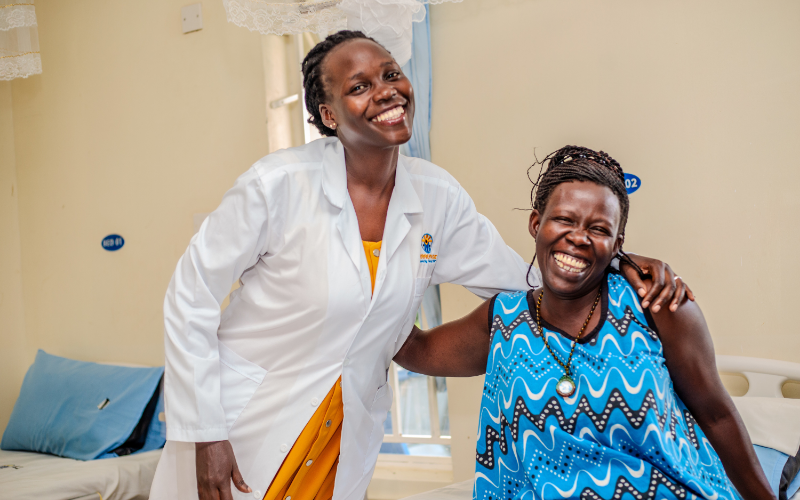
Fistula surgeons like Dr. Mary Aono (left) provide the life-transforming care that restores decades of health for women like Agnes, ensuring she can once again care for her family and contribute to her community. © Muthoni Njuki
The 2023 Scott gift was a vital catalyst for us to deliver on an ambitious five-year strategic plan to help as many women as quickly as possible. From 2023 to 2025, we rapidly distributed funding across partners to build capacity and supercharge surgical output. Our geographic reach expanded by 37%, and our global network of local partners grew by 49%, including launching countrywide treatment networks in Tanzania and Nigeria.
Funding has always limited our ability to provide timely fistula treatment, especially to women in rural Africa and Asia, which is why large, trust-based philanthropy is so important. Steady, flexible support allows organizations like ours to strengthen health systems, raise awareness, and ensure no woman suffers for years before receiving life-changing care.
Based on our experience, we have several recommendations for funders or peers seeking to strengthen trust-based philanthropic practices in your region:
First, large-scale, trust-based philanthropy shifts the focus from oversight to outcomes. Scott’s model relied on rigorous upfront vetting, not long proposals or frequent reports. Less paperwork and more reliable funding meant our staff could pour their energy into what counts: transforming the lives of the one million women who are needlessly suffering.
Second, flexible funding accelerates real-world solutions, often in underserved areas. By trusting our deep experience with our global network of local partners, Scott’s unrestricted gift supported life-changing care in high-need, politically complex regions where most funders will not go, including the Democratic Republic of Congo, Somalia, and Afghanistan.
Finally, trust-based giving is catalytic and cascading. One major institutional donor explicitly cited the Scott grant and our demonstrated impact as the reason for a subsequent multimillion-dollar investment.
“The takeaway is simple: when funders reduce administrative burden and focus on meaningful metrics, resources flow where they matter most. Trust-based philanthropy isn’t a luxury—it’s a force multiplier.”
Pam Lowney, Chief Executive Officer, Fistula Foundation
Download this case study
For more, see our report What Flexible Funding Makes Possible: How Global South Organizations Leveraged Funding from MacKenzie Scott to Sustain Impact in Turbulent Times.
 Your Vision
 Our Platform
 Real impact
Panorama Global is a member of The Panorama Group.
Privacy Policy © 2026 Panorama Global. All rights reserved.
 Contact Us
 Search
 Join Our Mailing List