
 Knowledge CenterArticlesCase Study: Centre for Catalyzing Chang… Case Study: Centre for …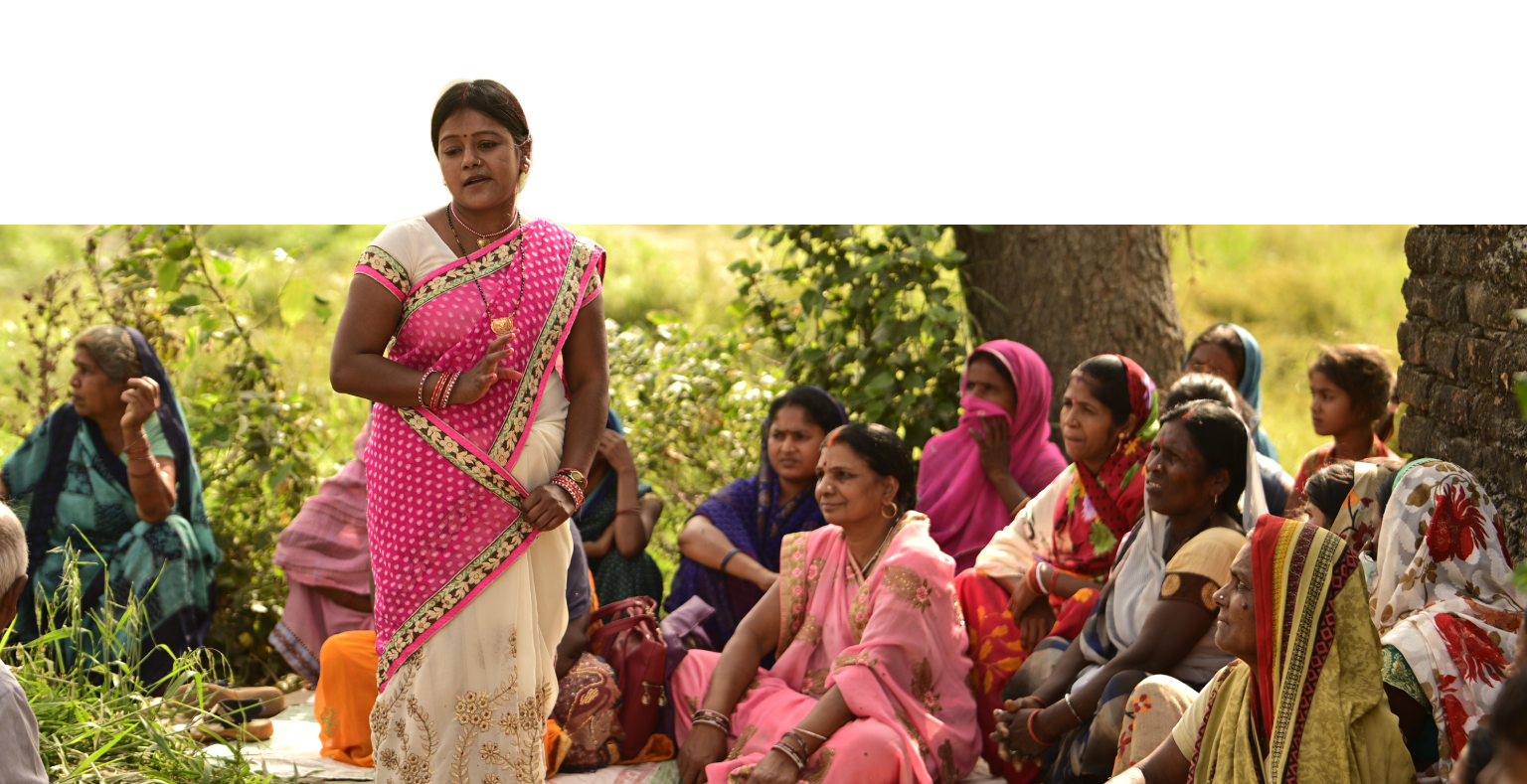
Gender-transformative leadership in action: breaking barriers, one conversation at a time. © Centre for Catalyzing Change (C3)
India’s landscape is marked by both potential and persistent gaps. The country’s significant youth population continues to have unequal access to quality education, life skills, and pathways to work. Girls often drop out of school after puberty, and navigate early marriage pressure, limited sexual and reproductive health awareness, restricted mobility, and entrenched gender norms. These challenges compound in rural and underserved regions, with fragmented digital and service access. Since its inception in 1987, C3’s initiatives have consistently highlighted and tackled these gaps through multi-pronged, scalable strategies—catalyzing ecosystem-level change and mobilizing communities. This has included large-scale participatory campaigns such as YouthBol and What Women Want, which amplified thousands of young people’s and women’s voices in shaping health and social progress.
In 2020, the COVID-19 pandemic deepened existing gaps, exacerbating school dropouts, early marriage, and mental health challenges. At the same time, amendments to India’s Foreign Contribution Regulation Act meant nonprofits could no longer subgrant, impacting project delivery, partnerships, and some interventions.
The trust-based grant from MacKenzie Scott has been a stabilizing force for C3 and supported C3’s strategic growth. C3 is utilizing the funds for enhancing the organization’s capacity, effectiveness, and overall performance rather than directly funding our day-to-day operations or specific projects. C3 is strengthening internal capabilities, leadership development, strategic planning, staff training and development, technology upgrades, and financial management improvements, and testing innovative initiatives that enhance C3’s ability to achieve its mission and deliver its programs or services efficiently. The Scott grant helped expand programs into underserved regions, and strengthened interventions in girls’ education, mental health, and women’s economic empowerment.
The Scott grant enabled C3’s internal innovation fund, Ignite2Innovate—allowing pilot testing and experimentation in new thematic areas. Further, it helped create Excel and Elevate—C3’s internal staff capacity-building fund—which connected staff members to mission-aligned upskilling courses. The grant also played a key role in improving the organization’s digital systems and communication tools, and strengthened its financial resilience, reserves, and long-term planning.
Together, this flexible, unrestricted funding fostered C3’s organizational resilience, innovation, and sustainable impact across communities, programs, and geographies, laying the foundation for the next decade of work.
In addition, when a donor pulled out of the sector, the support enabled C3 to undertake immediate crisis response, like retaining core staff and safeguarding critical project work when other funding stopped.
C3 treats the Scott grant as a catalyst, and is using the funds to test new strategies, reach new demographics, and explore issues long in need of attention. The approach ensured responsiveness to emerging needs and equipped teams for sustainable impact in complex, resource-stretched environments.
C3 has set up principles of fund utilization—i.e., transparency and accountability, and flexibility—recognizing that C3 may have unique and evolving needs and circumstances, and prioritizing equity, diversity, and inclusion.
Large, flexible, trust-based philanthropy gives Global South organizations like C3 the space to innovate, adapt, and lead. It enables experimentation, technology investment, systems-level engagement, and long-term impact measurement, strengthening both organizational capacity and the broader ecosystem in times of uncertainty and shifting civic spaces.
To strengthen trust-based philanthropy, funders and peers should pair trust with genuine partnerships. Listen closely to local organizations throughout the grant lifecycle, value learning as much as delivery, and provide flexibility to adapt to shifting contexts.
This approach builds resilient partners who can stay rooted in communities while navigating uncertainty. When funders respect local expertise and support the organization as a whole, impact becomes more sustainable, responsive, and transformative.
Download this case study
For more, see our report What Flexible Funding Makes Possible: How Global South Organizations Leveraged Funding from MacKenzie Scott to Sustain Impact in Turbulent Times.
 Your Vision
 Our Platform
 Real impact
Panorama Global is a member of The Panorama Group.
Privacy Policy © 2026 Panorama Global. All rights reserved.
 Contact Us
 Search
 Join Our Mailing List