
 Knowledge CenterArticlesBuilding Democracy From the Ground Up: … Building Democracy From…
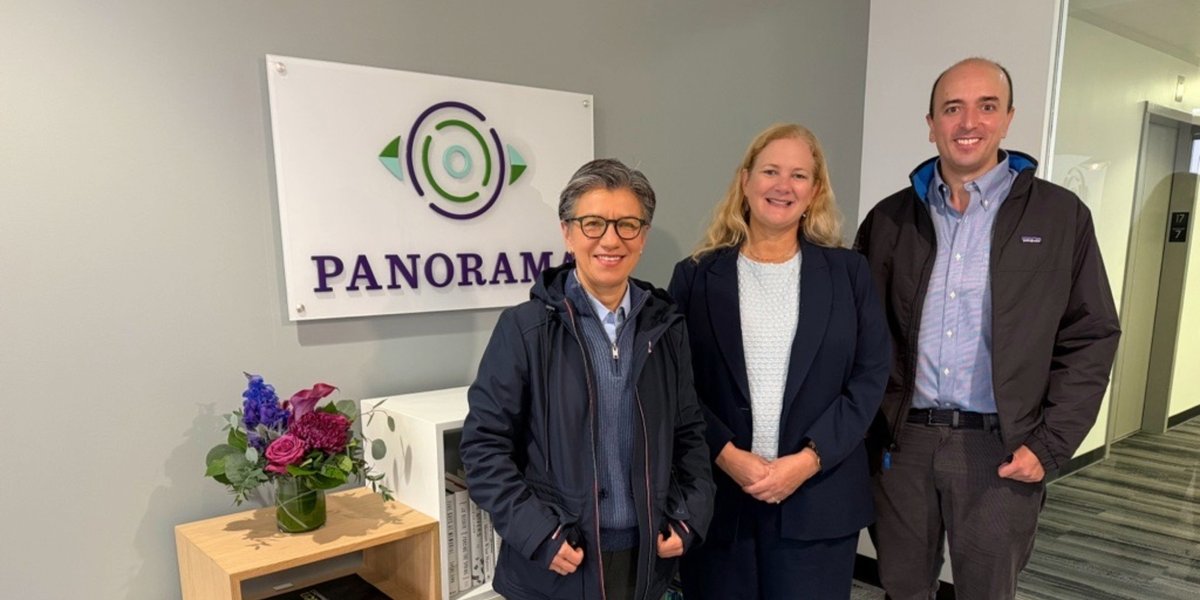
In this Q&A, we spotlight Siempre por Colombia, a Panorama Global partner based in Bogotá, Colombia that works with local leaders across the country to organize, connect and defend the democratic space they depend on.
From mid-September to mid-October, Claudia López, former Mayor of Bogotá, and Miguel Samper, former Deputy Minister of Justice, traveled across the U.S. to build a coalition of philanthropic, academic, technology, and democracy partners around this initiative. While on the west coast, they visited Panorama's Seattle office to meet with CEO Gabrielle Fitzgerald.
We asked the team to share the story behind their work, what they have learned along the way, and what comes next.
We started Siempre por Colombia to help people turn shared concerns into collective action. We founded it in Bogotá in 2024 to address three problems eroding Colombian democracy: fragmented communities, a deep loss of trust in institutions, and large parts of the country that do not feel represented. We also wanted to connect urban and rural communities that rarely meet, working from the ground up. Our method is public narrative and community organizing, developed by Marshall Ganz at Harvard and adapted to Colombia. We help local leaders tell their stories, find shared concerns, build relationships, and organize.
What excites us is putting powerful tools in the hands of people who know their communities. Grassroots organizing is about people: trust, relationships, showing up. Digital and AI tools can help a leader research a local issue, check information, or produce clear materials for neighbors. D-Lab, the applied democracy lab we are building, will be a place to practice those uses. Participants will also learn to check what the tools produce and protect privacy. We are seeking academic and technology partners to make responsible use part of community work. In the end, tools only help when human judgment and relationships guide them.
A local women’s association turned our training into a plan for a school library. In a rural village in Colombia’s Caribbean region, children grow up facing violence and the risk of recruitment by armed groups, and about 20 of them live with a hearing or cognitive disability. The association has worked there for more than a decade. After our training in public narrative and community organizing, its members came back with a plan of their own: strengthen the small library at the village school. We provided more than 50 coloring books, along with puzzles, child-sized tables and chairs, and a movable cabinet. The community now looks after the materials, and since the cabinet can travel, the library will reach the neighboring villages next. Because the women saw the need and designed the response, the library is theirs to keep going.
"The most energizing conversations have been about how ideas become something people can actually use. Our community work taught us that tools matter when people can apply them to their own problems."
The most energizing conversations have been about how ideas become something people can actually use. Our community work taught us that tools matter when people can apply them to their own problems. D-Lab, the applied democracy lab we are building, will work in three steps. First, big ideas: scholars, experts and practitioners help participants understand real problems. Then practical learning labs, where participants combine public narrative, organizing, digital and AI tools, verification and legal defense through real cases and simulations. Finally, democratic action pilots that participants propose, selected by vote using agreed criteria, and carried out with mentoring. Each pilot should produce a concrete result in a community and show us what works. That mix of organizing, democratic defense, and responsible AI has drawn the most interest.
Democracy is harder to defend when people face its warning signs alone. In Colombia, an attack on a journalist, pressure on a judge, or a wave of disinformation in a small municipality is often noticed late and faced alone. Meanwhile, digital platforms, AI and polarization are changing democracy faster than many civic actors can adapt. Recognizing those signals early, documenting them and responding together are skills communities need to build before the threats grow worse.
Panorama has been our fiscal sponsor since December 2024 and helps turn support from the United States into sustained work with communities in Colombia. Through Panorama, individuals and foundations in the United States can support our work with tax-deductible contributions. So far, those funds have helped cover coordination, financial management, communications and travel to the municipalities where we work. That is what keeps our work in those communities going.
"Success means communities that can keep organizing long after a workshop ends. Five years from now, that means leaders who no longer act alone and have the tools to protect the democratic space they depend on."
Success means communities that can keep organizing long after a workshop ends. Five years from now, that means leaders who no longer act alone and have the tools to protect the democratic space they depend on.
For Siempre por Colombia, it means D-Lab running regular cycles of learning and pilots with political leaders, journalists, lawyers, and community organizers across Colombia putting what they learn to work. We want evidence of what works, a strong institution to sustain it, and, if the model proves useful, partners across Latin America to adapt it with us.
The hardest part is making sure the work continues after the workshop. Training more people is one task; keeping their skills, networks, and initiatives alive in municipalities that are geographically far apart and hard to reach is more challenging. That is why D-Lab will pair learning with mentoring, follow-up on each pilot, and tracking of which skills people actually use. The evidence from each cycle will shape the next one. Security matters too: leaders who speak up alone are exposed, and a network gives them backing and a way to respond collectively.
When we added childcare, women became the majority of participants. Before that, many mothers could not attend because no one could look after their children. Many of the women we work with were already leading by taking care of others, keeping their families and neighborhoods going where the state falls short. Those same responsibilities often kept them out of the room.
They taught us that care is a form of leadership and also a condition to plan for in any space for participation. It changed how we work: an invitation is not enough; we have to address what lets people show up. Organizations working for democracy that overlook care will leave out many of the people who already lead their communities.
"Philanthropic partners can support the first learning cycles, pilot funding, and evaluation. Academic and practitioner partners can contribute ideas, teaching, and mentoring. Technology partners can help participants use these tools responsibly."
Help us turn community experience into the next cycle of democratic action. D-Lab is the next step in our organizing work. Philanthropic partners can support the first learning cycles, pilot funding, and evaluation. Academic and practitioner partners can contribute ideas, teaching, and mentoring. Technology partners can help participants use these tools responsibly. Donors in the United States can contribute through Panorama Global, our fiscal sponsor. We would love to hear from you.
See how Panorama’s fiscal sponsorship team can support your work.
 Your Vision
 Our Platform
 Real impact

Panorama Global is a member of The Panorama Group.
Privacy Policy © 2026 Panorama Global. All rights reserved.
 Contact Us
 Search
 Join Our Mailing List